

Blog
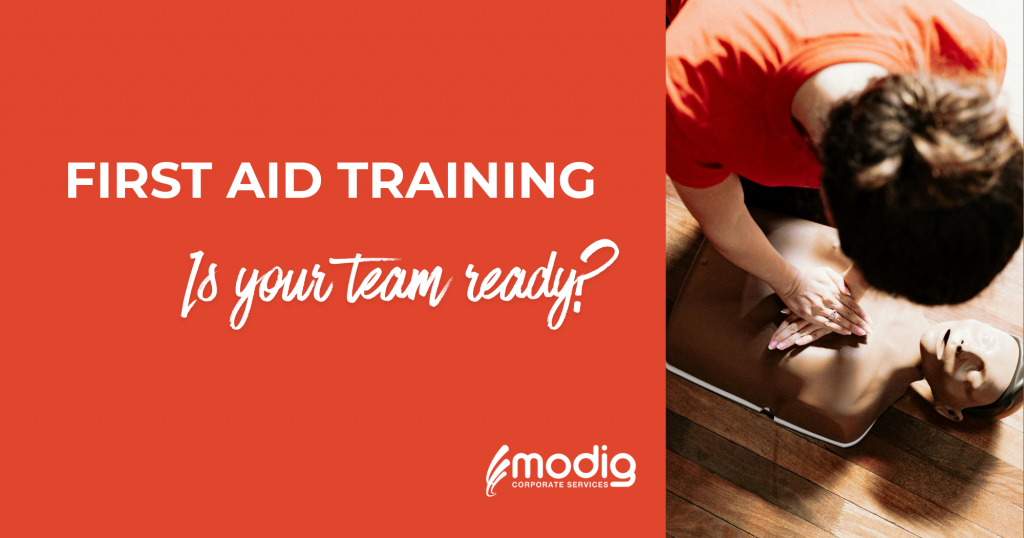
FIRST AID TRAINING, IS YOUR TEAM READY?
Oct
Emergencies happen without warning. In a busy workplace, the minutes between an accident occurring and the arrival of professional emergency services are critical. First aid training is not just a regulatory box to tick—it is a core pillar of workplace safety that directly protects your organization’s most valuable asset: its people.
Evaluating your team’s readiness requires looking closely at skills, compliance, and confidence.
The Reality of Workplace Emergencies
Many organizations assume a serious medical event will not happen on their watch. However, cardiac arrests, severe cuts, burns, choking, and sudden illnesses occur across all industries. According to health and safety statistics, immediate bystander intervention significantly increases survival rates and reduces the severity of long-term injuries. If an incident occurred today, could your team step forward effectively?
Three Pillars of Team Readiness
To determine if your team is truly prepared, assess these three critical areas:
| Pillar | Focus Area | Key Question to Ask |
| 1. Coverage & Compliance | Meeting legal requirements and ensuring adequate staff distribution. | Do you have trained first aid responders on every shift and in every department? |
| 2. Skill Retention | The freshness of physical and medical knowledge. | Have your designated responders practiced CPR or choking interventions in the last 12 months? |
| 3. Accessibility | The visibility and state of medical equipment. | Is your automated external defibrillator (AED) fully functional, and does everyone know where it is? |
Common Pitfalls in Workplace First Aid
- The “Designated Person” Dependency: Relying on a single trained employee creates a massive vulnerability if they are sick, working remotely, or away from the office when an incident occurs.
- Knowledge Decay: First aid skills fade quickly. Without regular refreshers, employees often forget the correct compression-to-breath ratios for CPR or how to properly apply a tourniquet.
- Hesitation and Panic: The psychological barrier is often the highest. Without practical, hands-on practice, fear of doing the wrong thing can paralyze employees during a real crisis.
Action Plan: Building a Ready Culture
- Conduct a Risk Assessment: Identify specific hazards unique to your industry—whether it is heavy machinery, chemical exposure, or prolonged sedentary office work.
- Upskill Beyond the Minimum: Aim to train a diverse cross-section of employees, ensuring coverage across different floors, teams, and shift schedules.
- Run Mock Drills: Incorporate medical emergency scenarios into your standard fire safety drills to test response times and communication protocols.
Investing in Peace of Mind
First aid training is a proactive investment that fosters a culture of care and mutual support. When employees know their peers are trained to protect them, morale and psychological safety improve. Ultimately, a fully trained team transforms a potentially tragic event into a manageable situation.
Need Professional EHS Training & Support?
If you are looking to review your risk factors, implement custom safety schemes, or schedule professional health and safety courses, contact Modig Corporate Services Ltd, a leading health, safety, and workplace wellbeing specialist:
Phone: 061 70 44 00 (or +353 61 518 406)
Email: info@modig.ie
Website: www.modig.ie
Headquarters: Cooraclare, Co. Clare, Ireland
by Paul Slemon